Overview
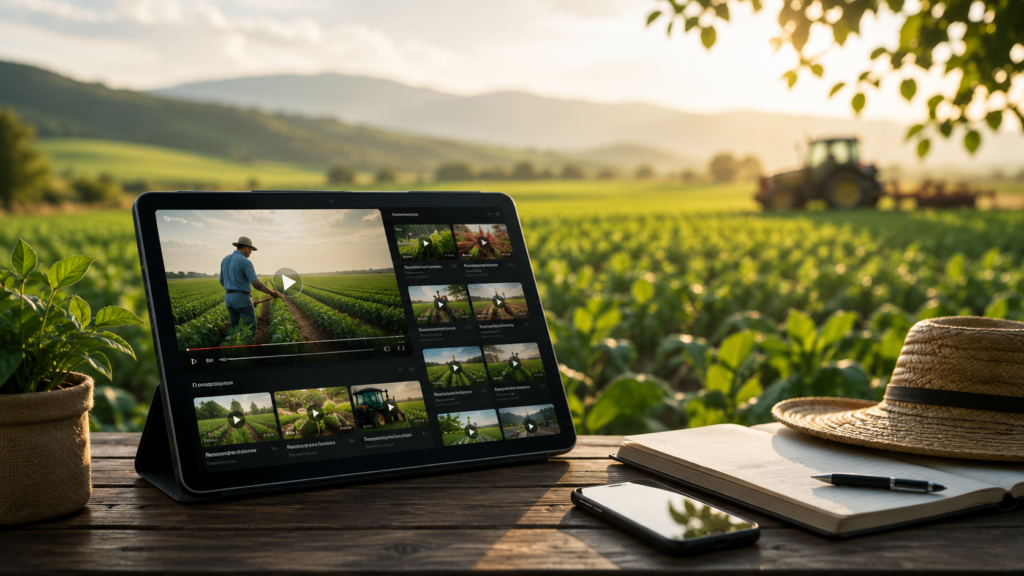
Farmers around the world learn best from other farmers. A smallholder in Ghana figuring out how to control crop pests, a dairy farmer in Nepal managing a new breed, or a woman entrepreneur in India processing food for local markets — all of them benefit far more from watching someone in a similar situation demonstrate a solution than from reading a manual written by researchers in a different country. EcoAgtube is a Drupal-built video sharing platform for Access Agriculture that brings that kind of knowledge exchange to a global scale. Think of it as YouTube, but purpose-built for sustainable agriculture and the environment, with content in dozens of local languages and a community of contributors spanning farmers, NGOs, research institutions, and development organisations across the world.
About the Client
Access Agriculture is a Brussels-based non-profit organisation with regional offices in Africa, Asia, Europe, and Latin America. Their mission is to promote agroecology and rural entrepreneurship through capacity development and South-South exchange, specifically through high-quality farmer-to-farmer training videos produced in international and local languages. The organisation has won the FAO International Innovation Award for Sustainable Food and Agriculture, reflecting the credibility and impact of their work. EcoAgtube is their open video platform, built to extend that mission beyond their own curated library and give anyone with a camera and practical knowledge a place to share what they know.
Goals
Access Agriculture needed a platform that could function as a true community video hub rather than just a content repository. They wanted farmers, development workers, NGOs, researchers, and agricultural organisations from anywhere in the world to be able to upload their own videos, organize them into channels and projects, and have that content discovered by others working on similar challenges. The platform needed to handle a genuinely global audience across a vast range of languages, from English and French to Hausa, Kiswahili, Khmer, Tamil, Amharic, and dozens more local languages and dialects. It also needed to serve both individual contributors and institutional partners who wanted a branded presence on the platform for their own collections of content.
Challenges
The language dimension alone made this project substantially more complex than a standard video platform. The content on EcoAgtube is not just multilingual in the interface sense. The videos themselves are produced in over 80 languages and dialects, many of which are not covered by standard translation tools or keyboard inputs. The platform needed to accommodate video uploads, metadata, and search in all of these languages without breaking down or defaulting to a single dominant language experience.
The content taxonomy was another significant challenge. Agricultural knowledge does not fit neatly into a few broad buckets. The platform needed to organize content across 13 top-level categories and more than 70 sub-categories covering everything from cereals, legumes, and spices to soil health, rainwater harvesting, pastoral farming, renewable energy, women entrepreneurs, school gardening, and ecotourism. Getting that taxonomy right, and making it navigable by someone browsing from a mobile phone in rural Africa, required careful information architecture.
Scaling the platform to support open community contribution while maintaining content quality and discoverability added another layer of complexity. Unlike a closed editorial platform, EcoAgtube needed to handle uploads from users with varying levels of technical confidence, from experienced NGO communicators down to farmers picking up video for the first time. The upload process had to be straightforward enough for a first-time user while still supporting the metadata and categorization that keeps the content findable.
Supporting institutional channels and project-based collections alongside individual user content meant the platform needed a flexible content model that could serve very different types of contributors without becoming confusing for either.
Solutions
We built EcoAgtube on Drupal 10, using its content management and user management capabilities as the foundation while building all the video platform functionality on top as a custom experience.
The video upload and management system allows registered users to submit videos with full metadata including title, description, language, categories, and thumbnail. Videos are stored on AWS S3 and served through a CDN, keeping delivery fast regardless of where the viewer is located. The upload interface is kept deliberately simple to lower the barrier for less technical contributors.
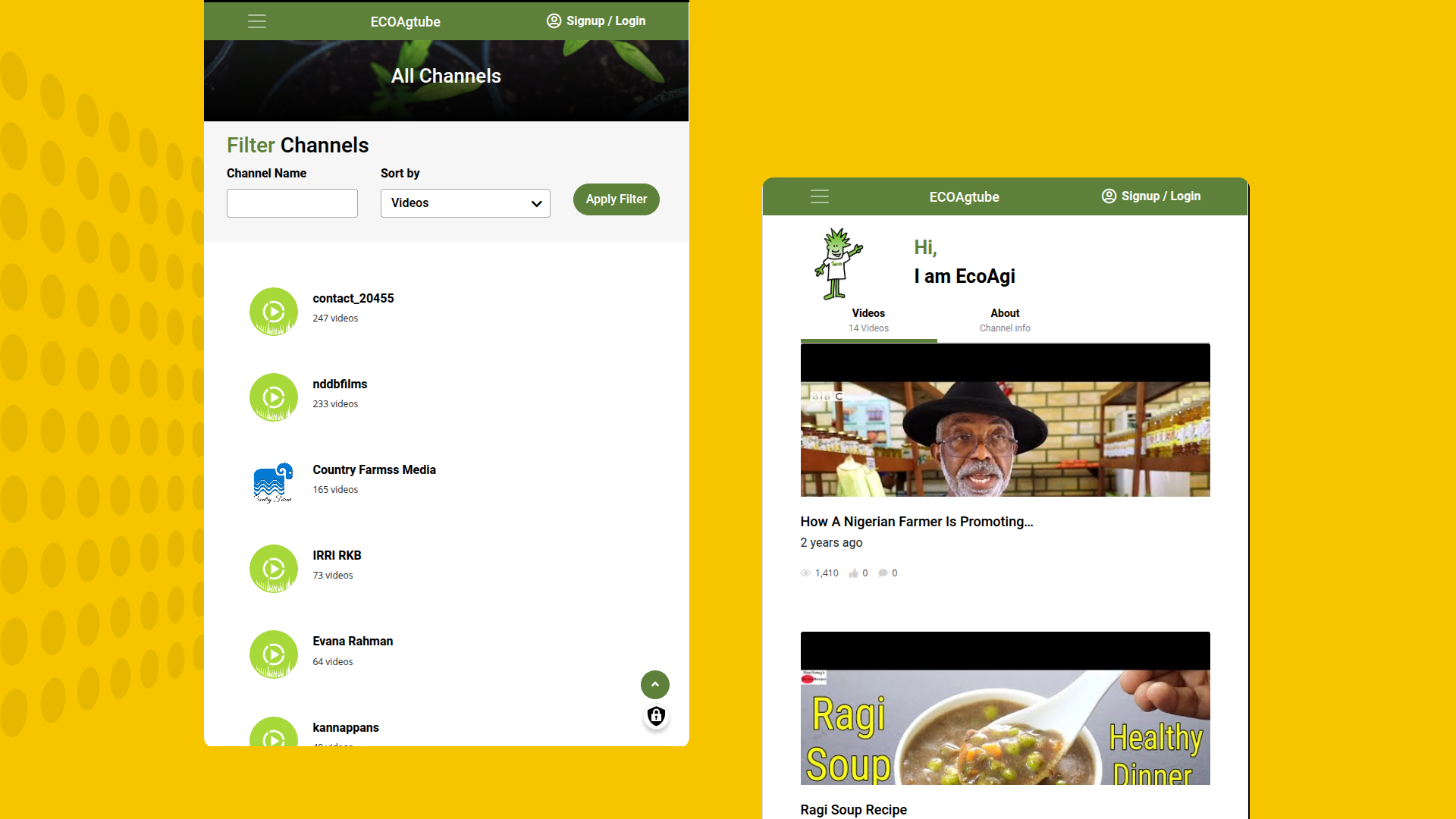
User channels give every registered contributor their own branded space on the platform, where their uploaded videos are collected and displayed. Institutional contributors like Access Agriculture itself, Naturland Academy, the Agroecology Coalition, TheWaterChannel, and Prolinnova each have their own channel presence, giving them a home for their collections within the broader community platform.
The Projects feature allows organisations to group related videos into named collections that sit above individual channels. This supports cross-organisational initiatives where multiple contributors are producing content around a shared theme or programme, such as the Agroecology Coalition project or the Organic Farm Knowledge initiative, without requiring all content to live under a single account.
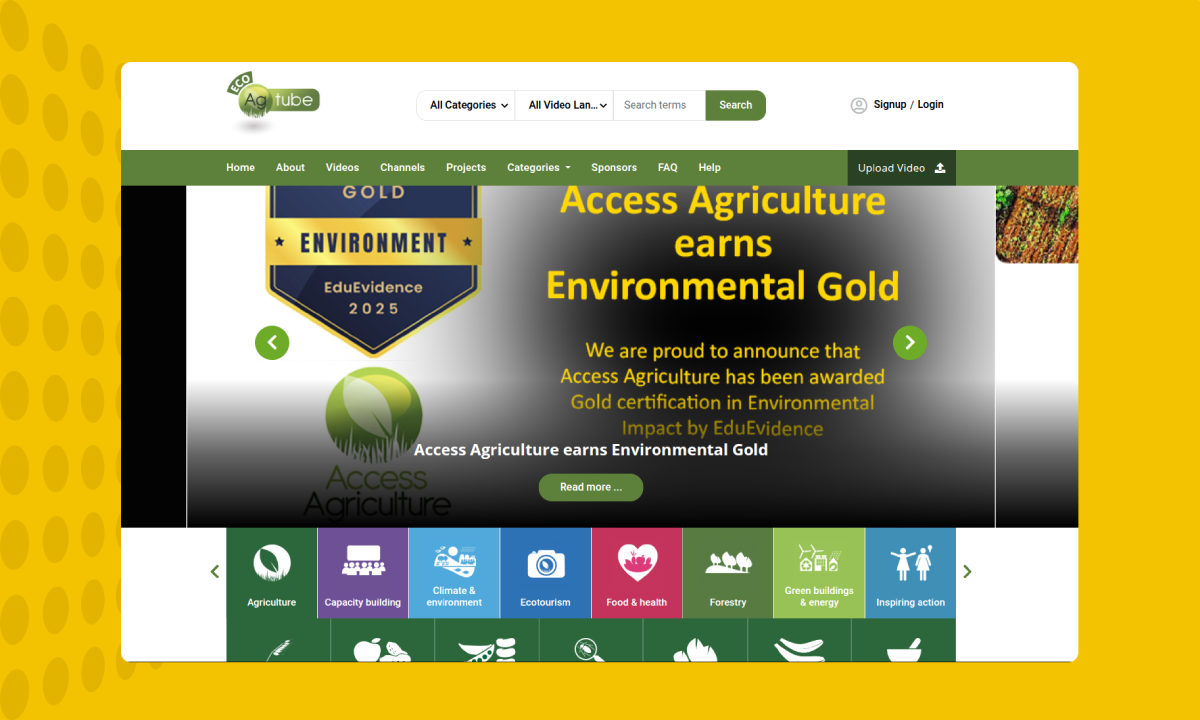
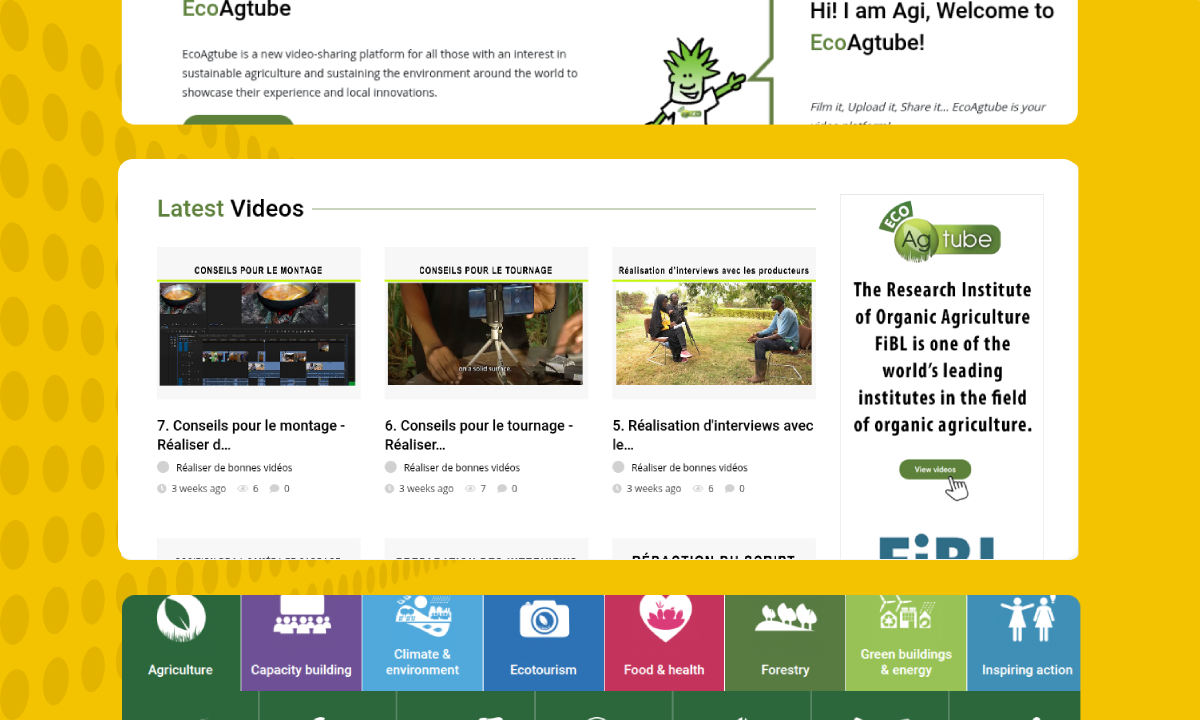
The category and sub-category taxonomy is implemented as a navigable hierarchy across 13 major topic areas and over 70 sub-categories. The homepage surfaces categories with visual icons to help users browse by topic, and each category and sub-category has its own landing page listing relevant videos. The video language filter gives users a second discovery path, letting them find content produced in a specific language regardless of category.
The platform interface itself supports over 100 languages through Google Translate integration, making the site navigable for users whose primary language is not English or French. Combined with the video language filtering system, this means a user can both browse the site and find videos in their own language from a single entry point.
Homepage sections for Latest Videos, Featured Videos, and Popular Videos give the platform the kind of dynamic front page that keeps regular visitors engaged and surfaces fresh content alongside proven popular material. Top Channels are highlighted to help new visitors find the most active contributors on the platform.
Sponsor and partner visibility is handled through a sidebar banner system and a dedicated sponsors page, giving organisations like Agro Insights, CountryWise, and the Swiss Development Cooperation a presence on the platform that supports the non-profit’s funding model.
Results
EcoAgtube now serves as a genuinely global community platform for sustainable agricultural knowledge, with content spanning dozens of countries, languages, and farming contexts. Individual farmers, NGOs, research institutions, and development organisations all have a place to contribute and discover content. Channels like Country Farmss Media with over 160 videos, and institutional contributors like Access Agriculture and Nawaya Egypt, have built meaningful libraries of content that others can find and learn from. The platform has attracted content in local languages that would have no other home on mainstream video platforms, making practical farming knowledge accessible to communities that are otherwise underserved by digital resources. The open contribution model means the library grows continuously as new contributors from around the world add their knowledge to the platform.