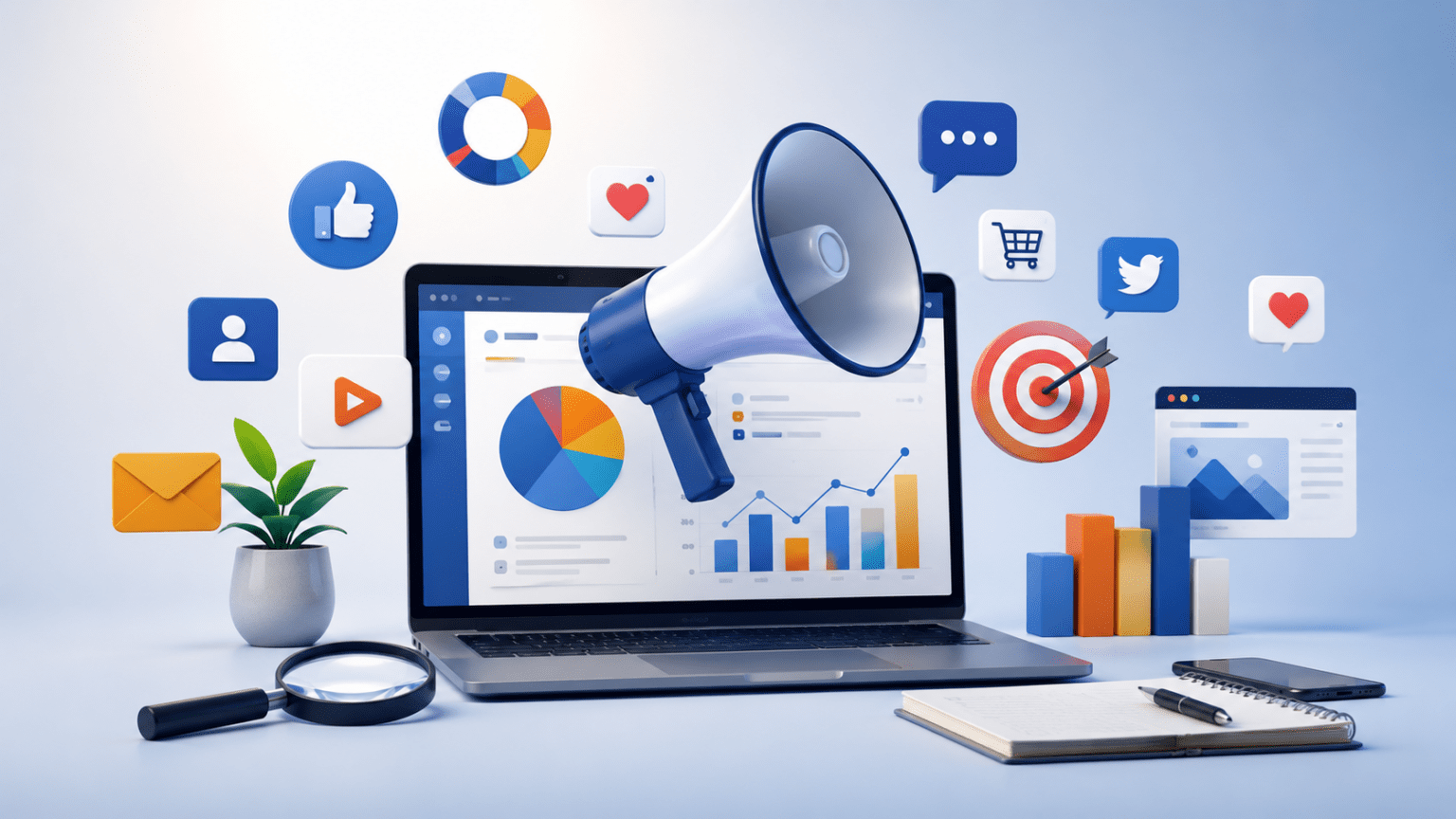
The Digital First Business Landscape
The way people discover, research, and purchase products has changed dramatically over the last decade. Consumers no longer rely solely on television advertisements, newspaper promotions, or billboards to learn about a brand. Instead, they turn to search engines, social media platforms, online reviews, videos, and AI powered tools to make informed decisions.
Whether someone is searching for a local service, comparing software solutions, or shopping for products online, their journey often begins on the internet. This shift has made digital marketing one of the most important growth drivers for businesses of all sizes.
From startups and small businesses to global enterprises, organizations use digital marketing to increase visibility, attract potential customers, build trust, and generate revenue. Understanding how digital marketing works is essential for staying competitive in today’s connected world.
What Is Digital Marketing?
Digital marketing is the practice of advertising and promoting products, services, or brands through online channels and digital tools. These channels include search engines, websites, social media platforms, email, mobile applications, online advertising networks, and other internet based platforms.
The primary goal of digital marketing is to connect businesses with their target audience where they spend most of their time online. Unlike traditional marketing methods, digital marketing allows companies to track user behavior, measure campaign performance, and optimize strategies based on real data.
Companies use digital marketing to promote their brand, increase website engagement, generate qualified leads, maintain customer connections, and support business growth. The ability to reach highly targeted audiences makes digital marketing a powerful and cost effective marketing approach.
How Digital Marketing Has Changed Over the Years
Digital marketing has evolved significantly since the early days of the internet. Initially, businesses focused on creating websites and sending email campaigns. As search engines became more sophisticated, search engine optimization emerged as a key strategy for improving online visibility.
The rise of social media platforms transformed how brands communicate with customers. Businesses gained opportunities to engage directly with audiences through interactive content, live videos, and community discussions.
Today, artificial intelligence, automation, predictive analytics, and personalized experiences are shaping the future of digital marketing. Businesses can now analyze customer behavior in real time and deliver highly relevant content based on individual preferences.
Why Digital Marketing Matters for Modern Businesses
Digital marketing helps businesses reach customers at every stage of the buying journey. It provides opportunities to attract new audiences, strengthen customer relationships, and improve long term growth.
Some of the key benefits include:
- Greater online visibility
- Better audience targeting
- Increased brand awareness
- Improved customer engagement
- Higher return on investment
- Measurable campaign performance
- Enhanced customer experiences
Because digital marketing is highly adaptable, businesses can continuously refine their strategies based on customer behavior and market trends.
Traditional Marketing vs Digital Marketing
Traditional marketing relies on channels such as television, radio, newspapers, magazines, and outdoor advertising. While these methods can still be effective, they often require larger budgets and offer limited audience targeting.
Digital marketing provides more precise targeting capabilities. Businesses can reach users based on location, interests, demographics, online behavior, and purchasing intent. Moreover, the availability of detailed campaign data allows marketers to assess outcomes and refine their strategies based on real insights.
This ability to track and optimize campaigns has made digital marketing a preferred choice for many organizations.
Core Types of Digital Marketing
A successful digital marketing strategy combines multiple channels to accomplish specific business goals.
Search Engine Optimization
SEO helps websites attract more organic traffic by improving their visibility in search engine results pages. SEO includes keyword research, technical optimization, content creation, link building, and user experience improvements.
Pay Per Click Advertising
PPC advertising allows businesses to display ads on search engines and digital platforms. Advertisers are billed based on the number of clicks their ads generate. Popular PPC platforms include Google Ads and Microsoft Advertising.
Content Marketing
Content marketing focuses on creating and sharing valuable, relevant content to attract and engage target audiences. Blog posts, case studies, guides, infographics, and videos are commonly used content formats.
Social Media Marketing
Social media marketing helps businesses connect with audiences through platforms such as Facebook, Instagram, LinkedIn, X, TikTok, and YouTube. It supports brand awareness, engagement, and lead generation.
Email Marketing
Email marketing remains one of the most effective digital channels for nurturing leads and maintaining customer relationships. Personalized email campaigns can improve engagement and conversions.
Affiliate Marketing
Affiliate marketing allows businesses to partner with publishers or content creators who promote products and services in exchange for commissions.
Influencer Marketing
Influencer marketing involves collaborating with trusted industry experts or content creators who can influence purchasing decisions among their audiences.
Video Marketing
Video has emerged as one of the most popular and widely consumed forms of online content. Businesses use videos for product demonstrations, educational content, testimonials, and brand storytelling.
Mobile Marketing
Mobile marketing focuses on reaching users through smartphones and tablets using mobile optimized websites, applications, SMS campaigns, and location based promotions.
Online Reputation Management
Managing online reviews, ratings, and brand perception has become an important part of digital marketing. Positive online reputation helps build customer trust.
Understanding the Digital Marketing Funnel
The digital marketing funnel represents the customer journey from initial awareness to long term loyalty.
Awareness
Potential customers discover a business through search engines, advertisements, social media content, or referrals.
Consideration
Prospects begin evaluating products or services by reading content, watching videos, comparing options, and researching reviews.
Conversion
At this stage, users take desired actions such as making purchases, submitting inquiries, or requesting consultations.
Retention
Businesses continue engaging customers through email marketing, loyalty programs, and personalized experiences.
Advocacy
Satisfied customers become brand advocates who recommend products and services to others.
The Growing Role of AI in Digital Marketing
Artificial intelligence is transforming how marketers plan, execute, and optimize campaigns.
AI can assist with content creation, audience segmentation, customer insights, and campaign management. Marketing teams use AI tools to analyze large datasets and identify patterns that would be difficult to detect manually.
AI powered advertising platforms help optimize bidding strategies and improve campaign performance. Predictive analytics can forecast customer behavior, while marketing automation tools streamline repetitive tasks.
AI chatbots and virtual assistants also improve customer support by providing instant responses and personalized recommendations.
Advanced Digital Marketing Strategies for 2026
As digital marketing continues to evolve, businesses are adopting more advanced approaches.
Answer Engine Optimization
Answer Engine Optimization focuses on helping content appear in AI generated responses and featured answers.
Generative Engine Optimization
Generative Engine Optimization aims to improve visibility within AI powered search experiences and generative search platforms.
Voice Search Optimization
More consumers are using voice assistants to find information. Businesses must optimize content for conversational search queries.
Zero Click Search Optimization
Many users receive answers directly on search result pages without clicking websites. Optimizing for featured snippets and knowledge panels can improve visibility.
First Party Data Strategy
As privacy regulations increase, businesses are relying more on first party customer data collected directly from users.
Hyper Personalization
Modern consumers expect personalized experiences. Businesses use customer data and AI insights to deliver highly relevant content and offers.
Omnichannel Marketing
Successful brands create seamless experiences across websites, social media, email, mobile applications, and offline touchpoints.
Essential Digital Marketing Tools
Digital marketers rely on a wide range of tools to manage campaigns, analyze performance, create content, and improve efficiency. The right combination of tools can help businesses make better decisions and achieve stronger results.
Analytics and Reporting Tools
Analytics tools help businesses understand website traffic, user behavior, conversions, and customer journeys.
Popular tools include:
- Google Analytics 4
- Google Search Console
- Looker Studio
These platforms provide valuable insights that help marketers optimize campaigns and improve website performance.
Search Engine Optimization Tools
SEO tools assist with keyword research, competitor analysis, backlink monitoring, rank tracking, and technical audits.
Popular tools include:
- Ahrefs
- Semrush
- Moz
- Screaming Frog SEO Spider
- Ubersuggest
- Google Keyword Planner
These tools help marketers improve search visibility and increase organic traffic.
Pay Per Click Advertising Tools
PPC tools help businesses create, manage, and optimize advertising campaigns across search engines and digital platforms.
Popular tools include:
- Google Ads
- Microsoft Advertising
- Meta Ads Manager
- LinkedIn Campaign Manager
- Google Ads Editor
These platforms support audience targeting, bid management, and conversion tracking.
Social Media Management Tools
Social media tools help marketers schedule content, monitor engagement, and manage multiple social media accounts.
Popular tools include:
- Hootsuite
- Buffer
- Sprout Social
- Later
- SocialPilot
These solutions simplify social media marketing and performance tracking.
Email Marketing Platforms
Email marketing tools allow businesses to create campaigns, automate communications, and nurture customer relationships.
Popular tools include:
- Mailchimp
- Brevo
- Constant Contact
- Kit
- ActiveCampaign
These platforms help improve customer engagement and retention.
Customer Relationship Management Systems
CRM platforms help businesses organize customer data, track interactions, and manage sales opportunities.
Popular tools include:
- Salesforce
- HubSpot CRM
- Zoho CRM
These systems help teams build stronger customer relationships and improve sales performance.
Marketing Automation Platforms
Marketing automation tools streamline repetitive marketing tasks and improve operational efficiency.
Popular tools include:
- HubSpot Marketing Hub
- Marketo
- ActiveCampaign
- Pardot
- Mailchimp Automation
Businesses use these platforms to automate lead nurturing, email workflows, and customer segmentation.
Content Creation and Design Tools
Content creation tools help marketers produce blog content, graphics, presentations, and visual assets.
Popular tools include:
- Canva
- Adobe Express
- Adobe Photoshop
- Adobe Illustrator
- Grammarly
These tools support content quality and brand consistency.
Video Marketing Tools
Video content has become a major part of digital marketing strategies.
Popular tools include:
- CapCut
- DaVinci Resolve
- Camtasia
- Filmora
These platforms help businesses create engaging video content for websites and social media channels.
AI Powered Marketing Tools
Artificial intelligence tools are transforming how marketers create content, analyze data, and optimize campaigns.
Popular tools include:
- ChatGPT
- Gemini
- Claude
- Surfer SEO
- Perplexity
These solutions improve productivity, content creation, and strategic decision making.
Collaboration and Project Management Tools
Marketing teams often use project management software to coordinate campaigns and track progress.
Popular tools include:
- Trello
- Asana
- ClickUp
These platforms improve communication and workflow management.
Conversion Rate Optimization Tools
Conversion optimization tools help businesses understand user behavior and improve website performance.
Popular tools include:
- Hotjar
- Microsoft Clarity
- Optimizely
These tools help identify opportunities to increase conversions and improve user experiences.
Selecting the right marketing tools depends on business goals, budget, team size, and marketing requirements. A well planned technology stack can improve efficiency, enhance customer experiences, and drive better marketing results.
How to Build a Successful Digital Marketing Strategy
An effective digital marketing strategy begins with clear business objectives. Organizations must identify their target audience, understand customer needs, and select appropriate marketing channels.
A successful strategy typically includes audience research, content planning, channel selection, campaign execution, performance measurement, and continuous optimization.
Regular analysis helps businesses identify opportunities, improve customer experiences, and maximize return on investment.
Key Metrics That Measure Success
Tracking performance is essential for understanding marketing effectiveness.
Common metrics include:
- Website traffic
- Organic search visibility
- Conversion rate
- Cost per acquisition
- Customer lifetime value
- Click through rate
- Return on investment
- Email engagement
- Social media engagement
These metrics help businesses evaluate progress and make data driven decisions.
Common Digital Marketing Challenges
Despite its benefits, digital marketing presents several challenges.
Businesses often face increasing competition, changing search algorithms, evolving consumer expectations, privacy regulations, and content saturation.
Keeping up with technological advancements and maintaining consistent performance requires ongoing learning and adaptation.
Why Businesses Partner With Digital Marketing Agencies
Many organizations work with digital marketing agencies to gain access to specialized expertise and resources.
Agencies can provide strategic guidance, campaign management, content development, SEO services, advertising support, and performance reporting.
By partnering with experienced professionals, businesses can focus on their core operations while benefiting from proven marketing strategies.
Digital Success Starts Here
Digital marketing continues to evolve as technology changes how people discover information and interact with brands. From SEO and content marketing to artificial intelligence and advanced personalization, businesses have more opportunities than ever to reach their audiences effectively.
Organizations that embrace innovation, prioritize customer experiences, and adapt to emerging trends will be better positioned for long term success. Whether you are a startup, a growing business, or an established enterprise, investing in digital marketing is no longer optional. It is an essential part of building sustainable growth in an increasingly digital world.
Frequently Asked Questions
What is digital marketing in simple terms?
Digital marketing is the practice of promoting products or services through online channels such as search engines, websites, social media platforms, email, and digital advertisements.
Which type of digital marketing is most effective?
The most effective channel depends on business goals, audience behavior, and industry. Many businesses achieve the best results by combining SEO, content marketing, social media marketing, email marketing, and paid advertising.
How long does digital marketing take to produce results?
Some strategies, such as paid advertising, can generate results quickly. Others, including SEO and content marketing, often require several months to deliver significant outcomes.
Is digital marketing suitable for small businesses?
Yes. Digital marketing offers cost effective opportunities for small businesses to reach targeted audiences, generate leads, and compete with larger organizations.
How is AI changing digital marketing?
AI helps marketers automate tasks, analyze customer behavior, personalize content, optimize advertising campaigns, and improve overall marketing efficiency.