
Overview
Legal professionals rarely sit at a desk when they want to catch up on reading. For ABI members and journal subscribers, keeping up with the latest developments in bankruptcy law and restructuring means fitting reading into commutes, travel, waiting rooms, and moments between meetings. The ABI Journal mobile app brings ABI’s flagship publication directly to members’ phones and tablets, giving them a modern, fast reading experience with features built around the way busy insolvency professionals actually consume content. We built the app in React Native for both iOS and Android, backed by the same Drupal 10 platform that powers abi.org.
About the Client
The American Bankruptcy Institute is the largest multi-disciplinary organization in the United States dedicated to research and education on insolvency issues. The ABI Journal is their flagship monthly publication, covering bankruptcy law, restructuring, and insolvency practice for attorneys, judges, academics, and financial professionals. With a readership of active practitioners who depend on the journal for professional development and keeping current on case law and legislative developments, the journal is one of ABI’s most valued member benefits. It carries archived articles across dozens of topic areas including consumer bankruptcy, business restructuring, international insolvency, ethics, student loans, and more.
Goals
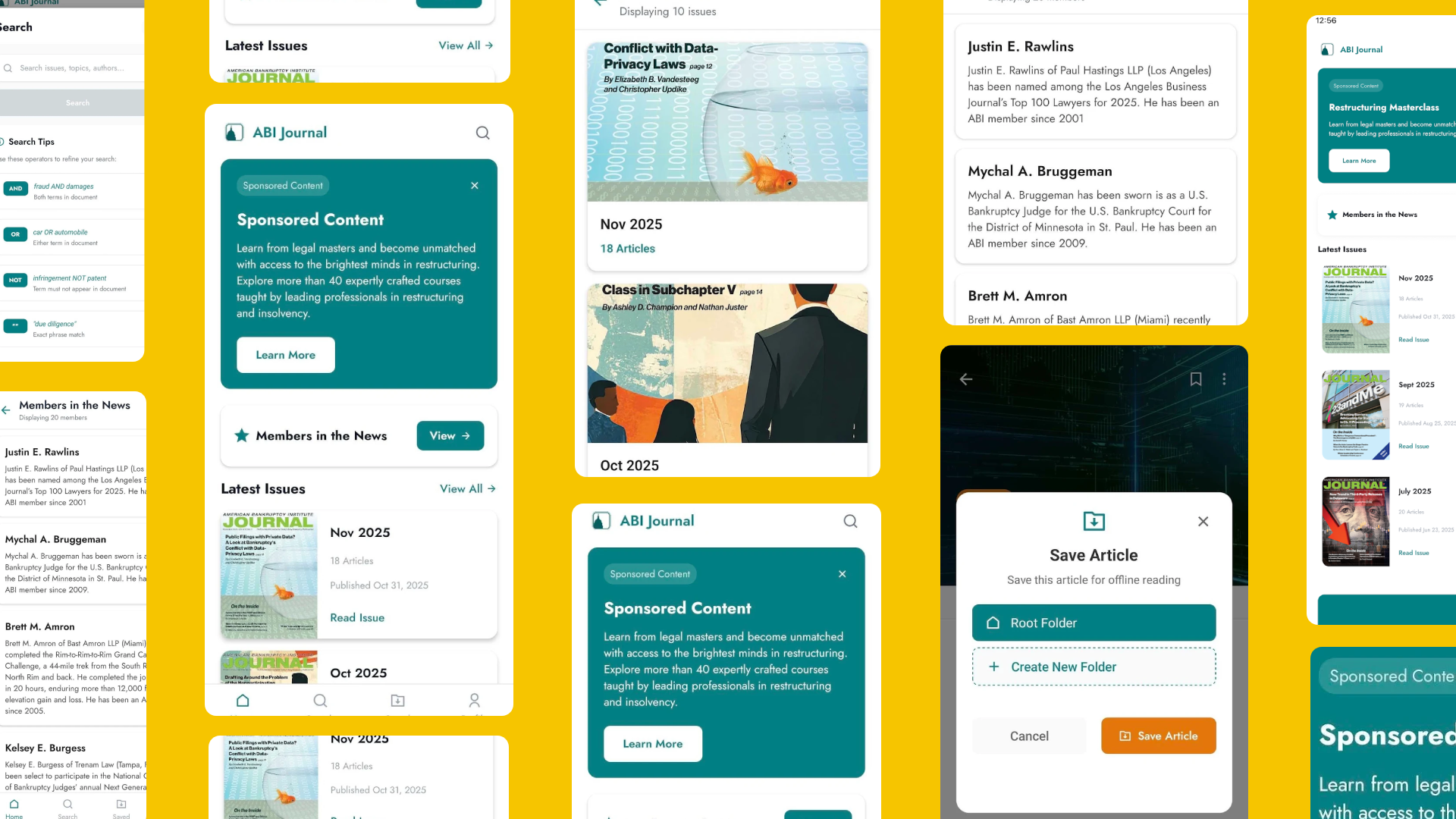
ABI wanted to give members a dedicated mobile reading experience that went beyond simply wrapping a web browser in an app shell. The goal was a purpose-built publication app that felt polished and responsive, and gave readers practical tools for managing what they read. Specifically, they wanted single sign-on so members would not have to log in repeatedly, article bookmarking for saving content to revisit later, sharing functionality for passing articles to colleagues, and offline download capability so members could read without a connection. The app also needed to surface related content like videos and podcasts alongside journal articles, connecting the journal experience to ABI’s broader media ecosystem.
Challenges
The primary technical challenge was authentication. ABI’s membership and identity system sits in Salesforce and connects to Drupal through a custom integration. Getting the mobile app to authenticate against that same identity layer, and do it in a way that felt seamless to the user, required implementing a one-time password flow that sends a code to the member’s registered email address and establishes a persistent session from that single verification step. Members who deal with complex legal systems daily still expect login on a mobile app to be fast and painless.
Content access needed to respect membership and subscription tiers. Not all journal content is open to all users, and the app needed to enforce the same access rules that govern the web experience, including distinguishing between active members, journal subscribers, and unauthenticated visitors. This meant the app’s content layer had to communicate correctly with the REST API built on the abi.org Drupal backend, including JWT-based session management for maintaining authenticated state between uses.
Choosing React Native as the framework meant we could maintain a single shared codebase for both iOS and Android rather than building and maintaining two separate native apps. This was an important practical consideration for a membership organization that needed to keep the app updated efficiently over time, but it still required careful attention to platform-specific behavior for features like offline downloads, push notification token management, and app store compliance on both Apple and Google platforms.
Solutions
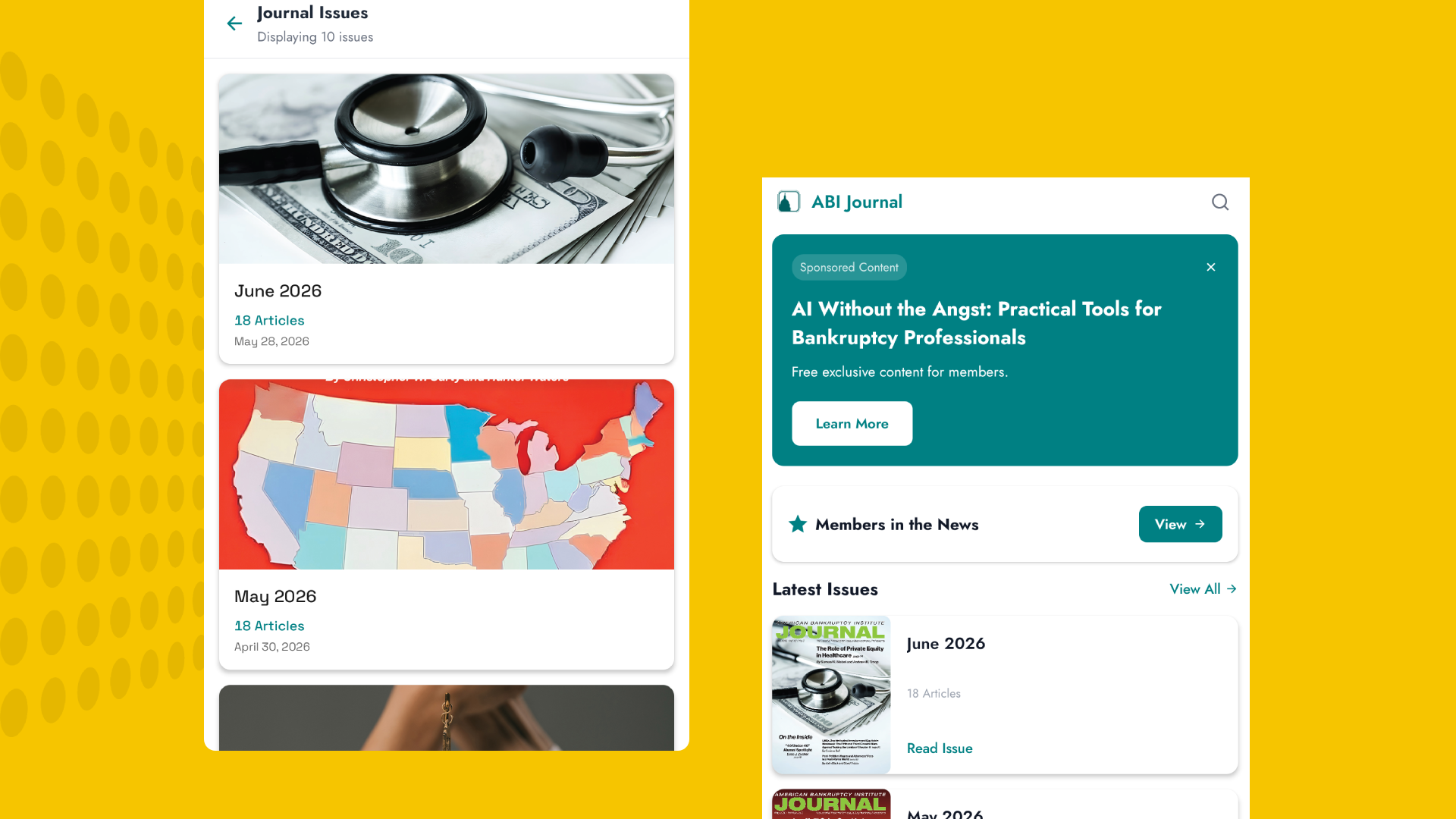
We built the ABI Journal app in React Native, published on both the Apple App Store and Google Play, with the Drupal 10 backend on abi.org serving all content through the REST API layer built as part of the broader abi.org platform.
Authentication uses an OTP flow where the user enters their ABI-registered email address once, receives a one-time code, and from that point the app maintains their session without requiring further logins. This eliminates the friction of remembering a password and aligns with how many members already access ABI resources through email-based workflows.
The article reading experience is built for screen comfort, with adjustable font sizes so members can set the text to whatever works best for their device and reading context. Each article surfaces related videos and podcasts where available, connecting the written content to ABI’s broader media library and giving members a richer entry point into topics they are researching.
Bookmarking lets members tag articles they want to return to, creating a personal reading list that persists across sessions and devices. The sharing feature allows members to send article links directly to colleagues, supporting the peer-to-peer knowledge sharing that is common in legal practice communities. Download functionality lets members save articles locally for reading when they are offline, which is particularly useful for members who travel frequently to courts and conferences.
The Members in the News section is surfaced in the app alongside journal content, keeping members connected to the professional community and aware of notable work by colleagues. Sponsored content is integrated in a way that maintains the editorial integrity of the publication while giving ABI’s advertising partners mobile visibility.
The React Native app connects to the same sponsored content, product, and push notification infrastructure built into the abi.org API layer, meaning that updates to journal content, member status changes, and new issue releases flow through to the app automatically without requiring separate content management.
Results
ABI members now have a dedicated, polished mobile reading experience for their journal subscription that works consistently across iPhone, iPad, and Android devices. The single shared React Native codebase means updates and new features ship to both platforms simultaneously, keeping the app current without doubling the development effort. The OTP-based single sign-on has eliminated the login friction that made earlier mobile experiences cumbersome for time-pressed professionals. The app launched in late 2025 and has been updated regularly since, with each release bringing refinements to the article detail experience and performance improvements. Members can read their journal on their own terms, whether at their desk, on a plane, or in between hearings, with their bookmarks and downloaded content always available.